Category: Radio astronomy
-
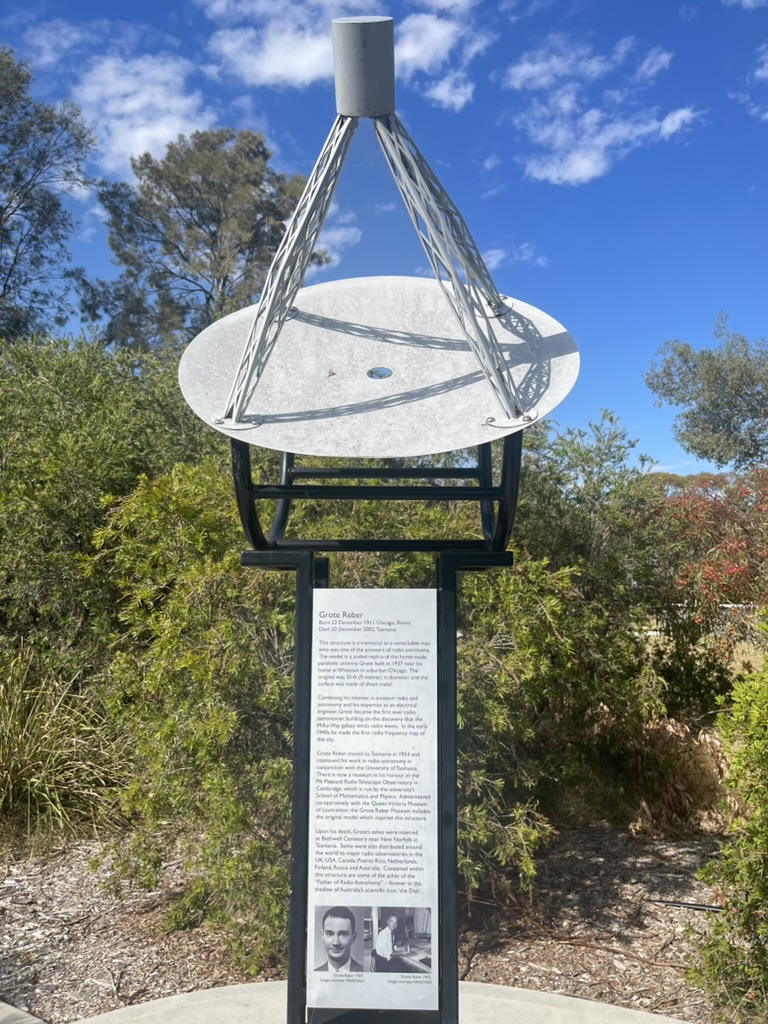
Grote Reber Memorial
Grote Reber (1911-2002), one of the pioneers of radio astronomy, settled in Australia in 1954. A memorial to his contribution to astrophysics at the Parkes Observatory includes a replica of his parabolic antenna made in 1937.
-

Mount Coonambro
Infrastructure on Mount Coonambro, in Central Western NSW, enabled the world to witness the 1969 Apollo Moon Landing. Today, this little mountain’s infrastructure receives and transmits satellite data for a local community radio station, 97.9 Valley FM, and for many other purposes.
-

UpCyc: Reactivating an old Radio Telescope
UpCyc, a 10-metre heritage radio antenna at the University of Canberra, was originally used for tracking satellites at Canberra’s Orroral Valley Tracking Station. It is now being restored by University staff and students for educational and research purposes. Its new site includes protected habitat for the endangered Golden Sun Moth.
-
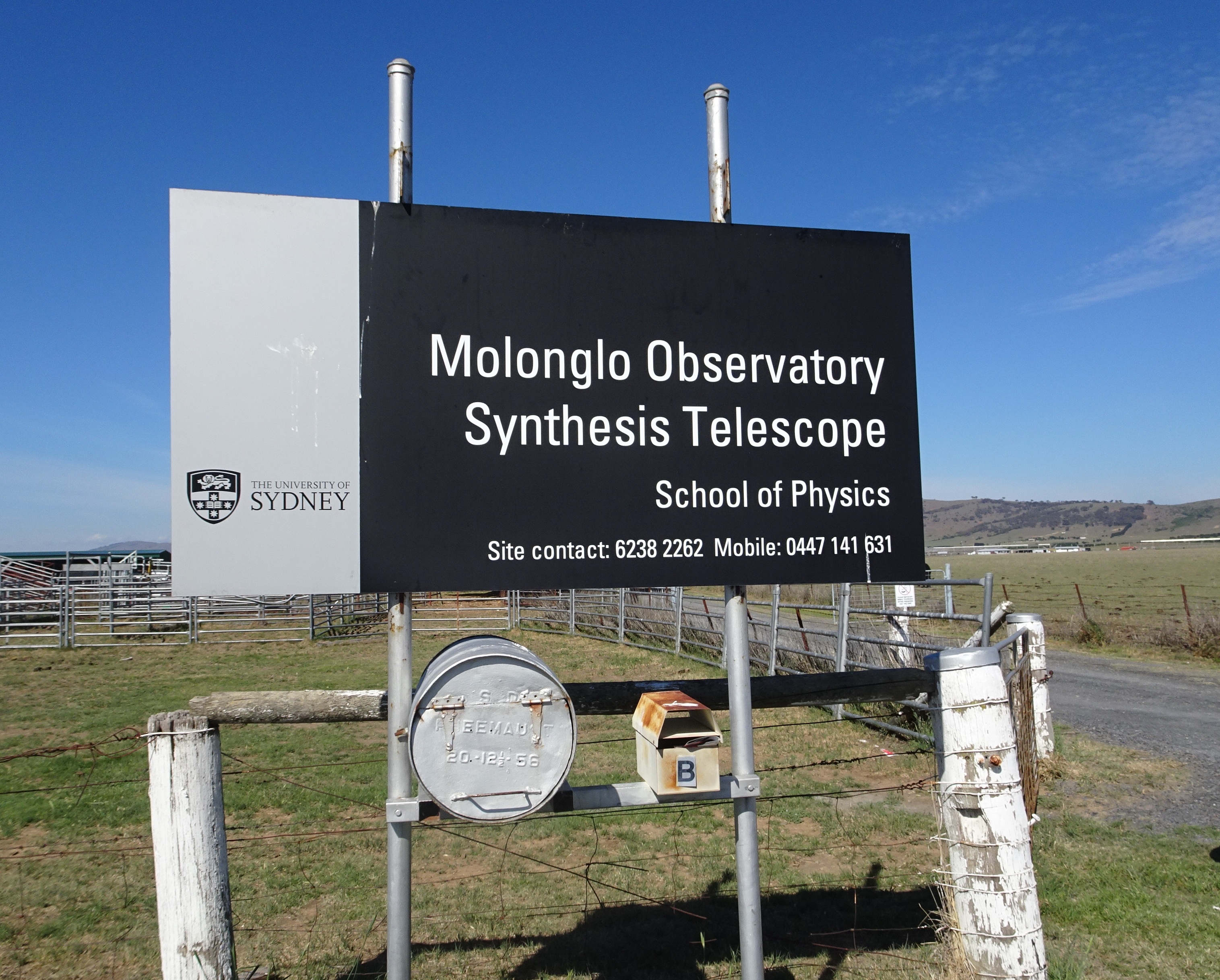
Molonglo Observatory Synthesis Telescope
The Molonglo Observatory Synthesis Telescope (MOST), is a parabolic cylindrical antenna owned by the University of Sydney near the village of Hoskinstown, NSW. Although it has undergone multiple upgrades, and has been used to make many important discoveries, its future remains uncertain due to changing technological and research needs.
-

Physics Building, University of Sydney
Sydney University’s historic Physics Building, designed by Richard Threlfall in 1886, hosts the Sydney Institute of Astronomy and the School of Physics, led by astrophysicist Professor Tara Murphy. Although the architecture emphasises the University’s very Euro-centric C19th scientific heritage, what’s happening inside is much more inclusive and exciting.
-

Mopra Radio Telescope
Mopra Telescope near Coonabarabran, NSW, is a 22-metre radio telescope operated by CSIRO’s Australia Telescope National Facility (ATNF). In 2014 it faced budget cuts but was saved through a crowdfunding campaign, which raised over $90,000 for research. Mopra operate as a single dish or as part of ATNF’s long baseline…
-
Fleurs Radio Telescopes
CSIRO’s Fleurs Field Station was a pioneering radio astronomy observatory near Penrith, NSW, which operated from 1954 to 1963. Its most innovative instruments included the ‘Chris Cross’ and the Kennedy Antenna, now at the Parkes Observatory and known by its new Wiradjuri name, Giyalung Guluman (Smart Dish).
-

Giyalung Miil, Parkes Observatory
The Giyalung Miil, a 12-meter antenna at Parkes Observatory in Central West New South Wales, was commissioned in 2008. It tests technology for the Australian Square Kilometre Array Pathfinder (ASKAP), situated at the Murchison Observatory in remote Western Australia.
-
Giyalung Guluman, Parkes Observatory
Giyalung Guluman, or Smart Dish, is a decommissioned 18-meter radio astronomy telescope at CSIRO’s Parkes Observatory in New South Wales. It was built in 1960 at CSIRO’s Fleurs site at Penrith and moved to Parkes in 1963. Known then as the Kennedy Dish or Antenna, it was given its Wiradjuri…
-

Potts Hill Field Station
Potts Hill, in south-western Sydney, was home to a pioneering radio astronomy station from the late 1940s to the 1950s. Those who worked here included Australia’s first female astrophysicist, Ruby Payne-Scott. Discoveries made at Potts Hill established the then-new science of ration astronomy.
-

Rodney Reserve, Dover Heights
Rodney Reserve at Dover Heights, Sydney, a former WWII radar station, is one of Australia’s most important radio astronomy heritage sites. Between 1946 to 1954 it was CSIRO’s Division of Radiophysics leading field station. Its various radio antennae were pivotal to the advancement of radio astronomy.
-

Collaroy Plateau
In October 1945, scientists Joe Pawsey, Ruby Payne-Scott, and Lindsay McCready modified a WWII radar station at Collaroy Plateau, Sydney, and detected strong radio emissions from the Sun. This event marked the birth of Australian radio astronomy. The site, now known as Collaroy Plateau Park, commemorates this historic achievement.
-

Cosmic Conjunctions At Parkes
The Elvis Festival draws thousands of fans to Parkes each January, generating millions of dollars for the local economy and fostering connections between music, astrophysics and people’s future aspirations. Many visitors are amazed by the celestial wonders of the region’s dark nights and by research at the Parkes Observatory.
